In the previous cover image posts I wrote about Clean and Catch’n’Merge and promised a follow-up once the numbers settled. The numbers settled. Today I finally have stable improvements. This time I want to talk about the progress on Hex Sense, our hex minesweeper-style puzzle, and give an update on Catch’n’Merge.
If you make casual games for web platforms and if you read our previous blogs you already know why this matters. The cover image is the only thing standing between your game and the thousands of people who play games online every day. They scroll past hundreds of thumbnails and your CTR decides whether your game exists for them at all. This is true for both browser games and for mobile games. The thumbnail is the front door.
Hex Sense: from 0.2% to 0.5% CTR
Hex Sense had the same problem all our games had (and still have): a cover that nobody clicks. The old CTR was 0.2%. For puzzle games, the bottom 20% threshold sits at roughly 1.7% CTR. So we weren’t just below average, we were far below the worst-performing fifth of the category.
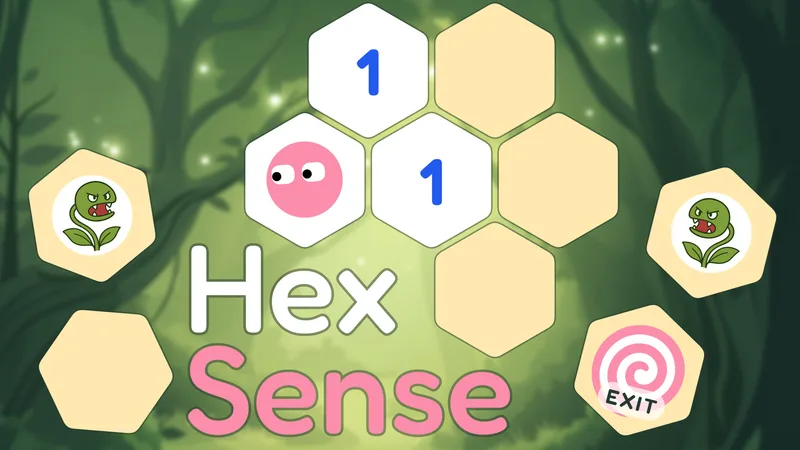
So we iterated. Here is the new image.
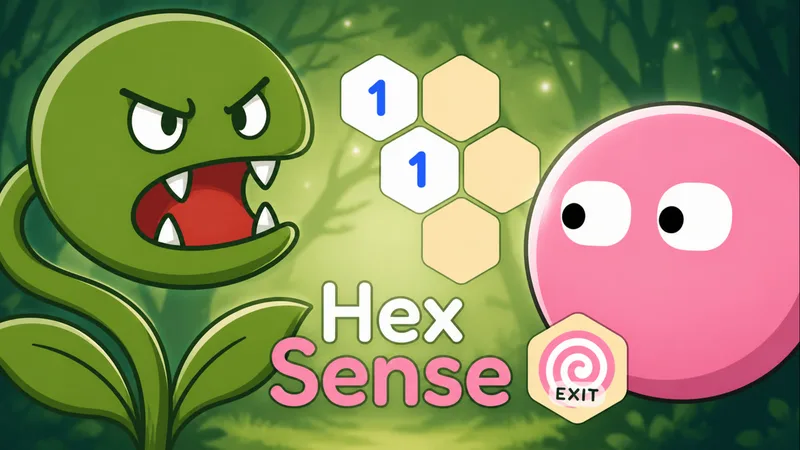
The new CTR is 0.5%. Let me be clear about what that means and what it doesn’t. It’s a 2.5x improvement, which is the biggest relative jump we’ve seen across any of our covers. It’s also still very low - we remain below the 1.7% threshold and far below the 2% milestone I set for our puzzle titles back in the first post. But unlike previous iterations that made CTR even worse or where gains were really tiny, this one held steady over enough impressions to trust it.
Why did it work better? I thought that adding big faces of the main hero of the Hex Sense puzzle - Mochi - and the main hazard of the first world would attract people. I read somewhere that people are attracted to images of faces more than to anything else. Plus the new image reads as a game faster - there are real game tiles with numbers and I’ve even added an Exit tile - exactly as it is in the game.
People browsing free online games give each thumbnail a fraction of a second. If they can’t instantly tell what kind of experience is behind it, they move on. So I think the old cover required players to stop and think about the interpretation and no one did that, so they just scrolled past it. The new cover image doesn’t require thinking a lot. It’s very obvious and clearly hints at the minesweeper game experience and also at the main character of the game.
Catch’n’Merge: when less beat more
Now the update I promised in Blog #2. Back then I had just shipped the third cover - the 3D flask on the ocean floor with creatures and objects flying around it. The idea was to show the chaos and speed, because Catch’n’Merge is a chaotic physics-based merge game and I wanted the cover to feel like the gameplay.
It didn’t work at all. It dropped CTR to 0.1%.
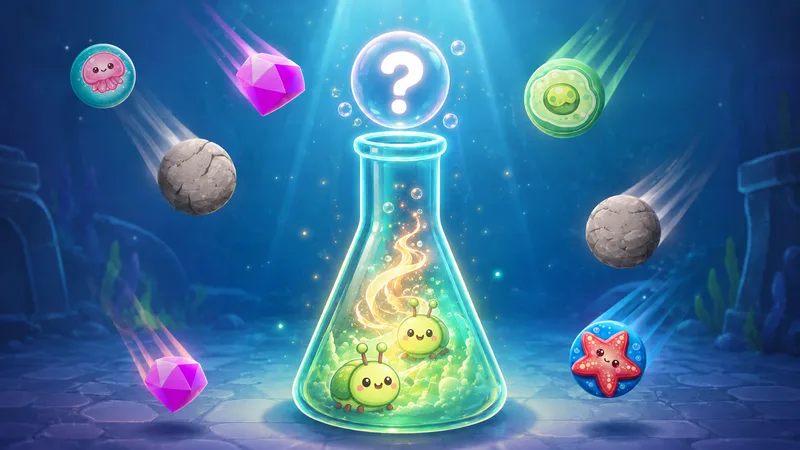
I still think the logic was good - show the energy, signal “arcade” - but the image itself was too “busy”. At thumbnail size, on a crowded platform page full of free browser and mobile games, I think it just got lost in the visual noise. There was no single dominant element for the eye to grab.
So we went in the completely opposite direction. The new cover is minimalistic. Just the flask on a dark background. Very close to what you actually see in the merge game itself. And I even simplified elements in the flask, to reduce visual noise even more.
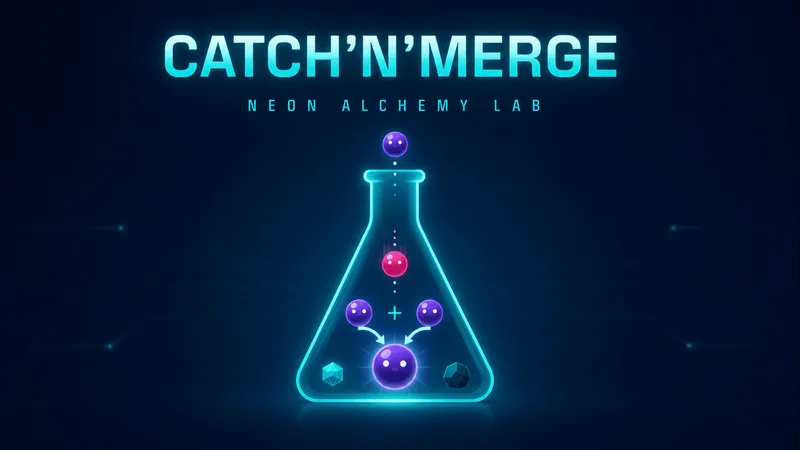
With this version we receive a stable 0.2% CTR. After three posts about adding energy and action to cover images, we went back to removing almost everything. If you read the full history of the earlier iterations in the previous post you can see that the current image is very similar to the very first image. So we would be in the same place without doing any improvements to the cover image at all.
What I’m taking from this
Two covers improved in the same period, and they improved for what I think is the same underlying reason: clarity at small sizes. Hex Sense got clearer about being a minesweeper puzzle with a cute character. Catch’n’Merge got clearer by cutting the clutter and showing the flask (which is kind of a main “character” of the game).
The other lesson is about honesty with numbers. 0.5% and 0.2% are not success stories by platform standards. Both games are still below their category thresholds and for an arcade title like Catch’n’Merge the bar is even higher than for puzzles. But “stable and improving” is a different situation from having low engagement and not even trying. And for a small studio like Pro Mobile without a designer on the team that’s the first real signal that iteration is working.
What’s next
The process stays the same: change the cover, wait for enough impressions to form a real number, change again. For Hex Sense I want to take a pause from iterations. For Catch’n’Merge, the question is whether the minimalistic flask can carry us past 0.3% or whether we’ve found a local maximum and need an entirely new concept.
In the meantime, try Hex Sense and Catch’n’Merge yourself and tell us in Discord which covers you would actually click.
Written by
Ana